Braces or clear aligners? Questions that help you choose
Both can move teeth. Better choice depends on your bite, treatment goals and daily habits—not appearance alone. Use these questions to prepare for an orthodontic assessment, not to diagnose yourself.
1. What does assessment need to establish?
Ask what is causing the concern: crowding, spacing, bite relationship, tooth position, or a combination. An orthodontist examines teeth and gums, how upper and lower teeth meet, and relevant health history. Records such as photographs, scans or X-rays may be recommended when clinically appropriate.
Ask which changes matter most, what each appliance can reasonably address, and whether other dental care should happen first. Understanding the plan matters more than choosing a product by its label.
2. How do braces and aligners work?
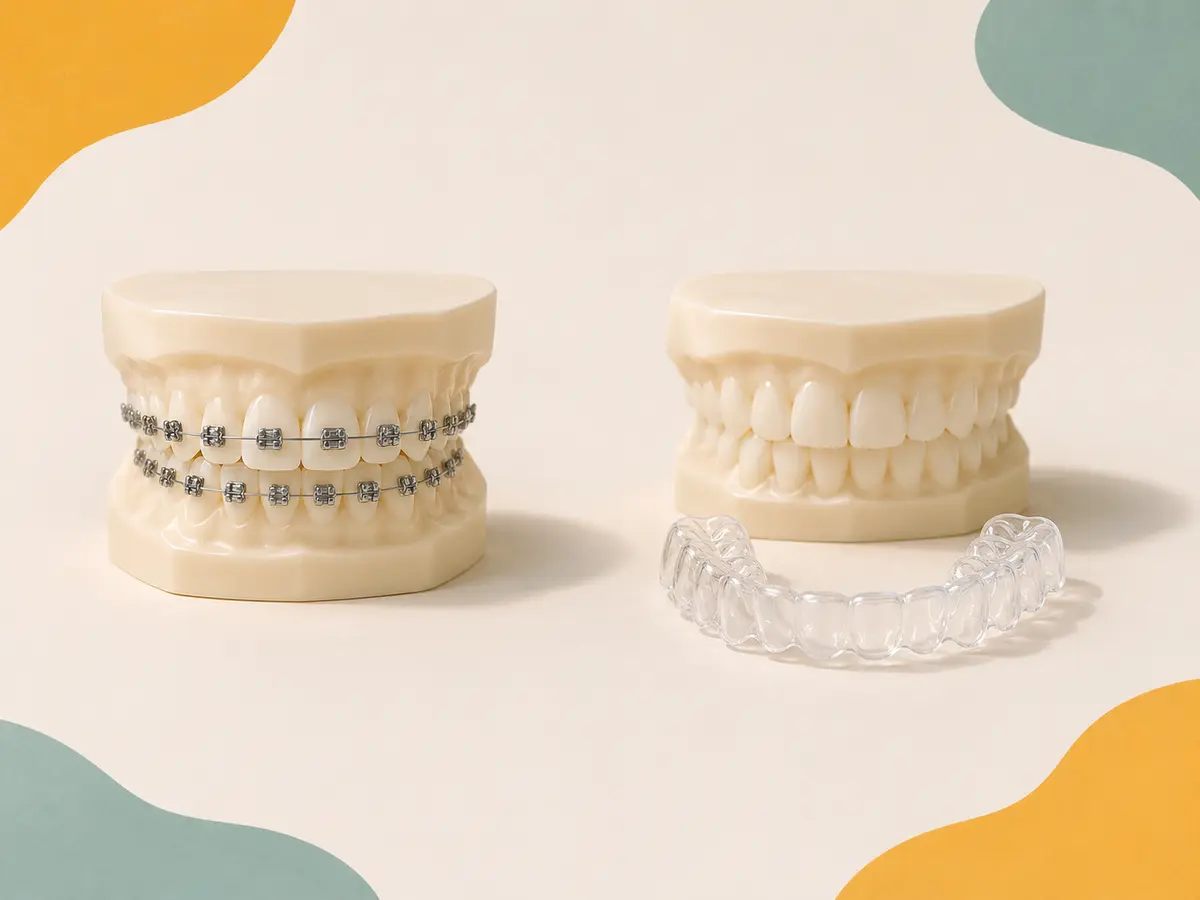
Fixed braces use brackets attached to teeth and a wire adjusted during care. They stay in place, so treatment does not depend on remembering to put an appliance back after meals. Brackets and wires can require extra cleaning, and some hard or sticky foods may need to be avoided.
Clear aligners are removable trays changed according to the clinician’s instructions. They move teeth while worn; many plans call for roughly 20–22 hours a day, but follow the specific prescribed schedule. Remove them for meals and for drinks other than water; clean teeth before putting them back. Not every case is suitable for aligners alone.
Fixed braces
- Wear responsibility: remain attached; no daily removal decision.
- Meals: avoid foods that can damage brackets or wires, as advised.
- Cleaning: brush carefully around brackets and clean between teeth.
- Appointments: attend planned checks and adjustments.
Clear aligners
- Wear responsibility: wear for prescribed hours; store safely when removed.
- Meals: remove to eat; water is generally the only drink taken with trays in.
- Cleaning: brush and floss teeth, and clean trays as instructed.
- Appointments: attend reviews; report lost, damaged or poorly fitting trays.
3. Which fits school, work, sport and routine?
Consider your real week. Can you reliably remove, store and reinsert aligners during classes, shifts, travel or social meals? Would a case and a consistent cleaning routine be practical? Forgetting trays or wearing them for too few hours can affect progress and may mean the plan needs review.
Braces avoid that wear-time task, but can irritate cheeks at first and need careful hygiene. For contact sports, ask about a suitable mouthguard with either appliance. If you play a wind instrument or speak frequently at work, ask what adjustment period and practical issues to expect.
4. What might limit suitability or change the plan?
Complex tooth movements, bite concerns, dental health, growth stage and previous dental work can influence recommendations. Some aligner plans use small tooth-coloured attachments; an aligner is not always entirely invisible. Braces also come in different forms, and options depend on clinical needs.
Ask what could make treatment take longer or require a different appliance, what discomfort or problems should prompt a call, and how progress will be checked. No appliance guarantees a particular result or timetable. Your clinician should explain alternatives and trade-offs for your case.
5. How does retention fit into the decision?
Active treatment is not the whole plan. Teeth can shift after appliances come off, so retainers are commonly recommended to help maintain their position. Ask what retainer type is proposed, how often to wear it, how it is cleaned and replaced, and what to do if it breaks or no longer fits.
Common questions
Are clear aligners always less noticeable?
They are transparent, but may still be visible at close range; attachments can be used. Appearance varies by appliance and case.
Can I switch from braces to aligners?
Sometimes a clinician may change the plan, but a switch is not automatic or suitable for everyone. Ask what would be involved and why.
Which option is faster?
Neither is reliably faster for everyone. Complexity, response to treatment, attendance and—especially with removable trays—following wear instructions all matter.
Bring these questions to your consultation
- What are my treatment goals and options?
- Why do you recommend this appliance for my teeth and bite?
- What daily tasks, visits and risks should I plan for?
- What could change the plan, and how will retention work?
A decision helper can organize preferences and prompt discussion; it cannot assess teeth or replace professional advice. Try the braces-or-aligners decision helper, then discuss your situation with a clinician. For appointment logistics, use contact and appointments.
Learn more about braces and orthodontics and clear aligners.
General educational information, not individual diagnosis or treatment advice. Source: American Association of Orthodontists: Braces vs. Clear Aligners.